Protect Your Home in St. Johns County from Hurricane Myths
A newer home isn't automatically hurricane-proof, most homeowners policies don't cover flood, and water can rise here without a named storm. Here's how to check the facts at the address.
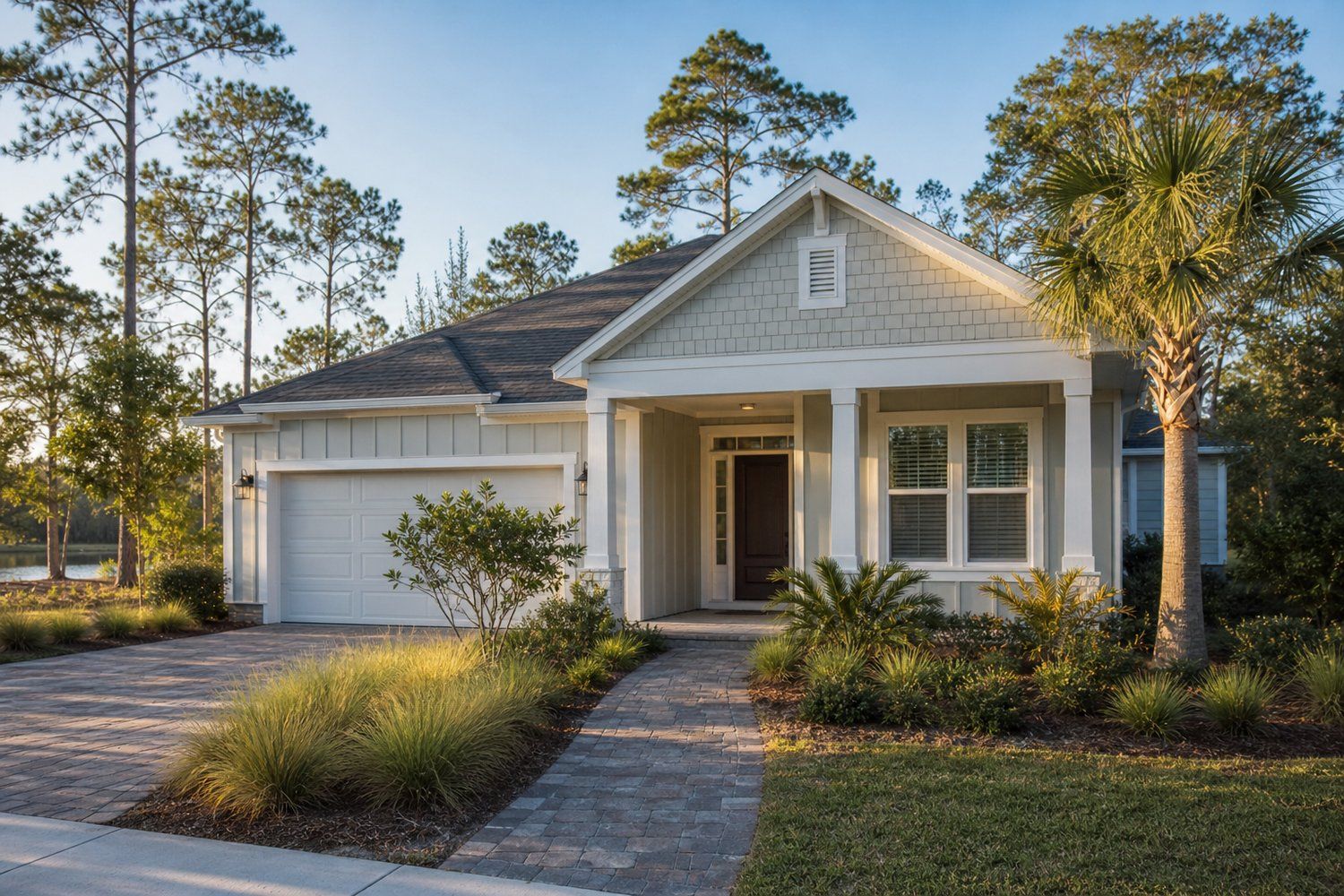
Short answer: You protect a home in St. Johns County from hurricane myths by checking the facts at the exact address: the flood zone, the evacuation zone, the roof, the openings, and your insurance exclusions. A newer home isn't automatically hurricane-proof, most homeowners policies don't cover flood, and water can rise here without a named storm.
By Brian Sacks, SRES®, Christie's International Real Estate First Coast · October 23, 2026
Key Takeaways
- Most homeowners policies do not cover flooding, so flood coverage has to be reviewed and confirmed separately.
- Florida's home-protection guidance names five wind-entry points: the roof, roof-to-wall connections, windows, exterior doors, and garage doors.
- A home built under the 2002-or-newer Florida Building Code may be more hurricane resistant, but only when its exterior systems are still in proper condition.
- On October 23, 2026, the National Weather Service reported coastal-flood advisories for Saint Augustine driven by northeasterly winds and high tides, with no hurricane involved.
What hurricane myths do buyers in St. Johns County believe?
The costly ones are that a new home is automatically safe, that flood is covered by standard insurance, and that flooding needs a hurricane. All three are wrong, and I hear them from buyers every season.
I sold 800+ homes with Pulte Homes and Del Webb. I learned fast that buyers fall in love with a house first and read the fine print second. Storm risk is where that habit hurts most. Here's the myth-versus-fact cheat sheet I walk my clients through.
| Common myth | What's true | Where to verify it |
|---|---|---|
| A new home is hurricane-proof | Newer code may help, but only when the roof, windows, doors, and connections are in proper condition | Permit history, a home inspection, and the state's Planning for Your Home guidance |
| Homeowners insurance covers flood | Most homeowners policies do not cover flooding | Your policy and your insurance agent |
| No hurricane means no flooding | Strong northeasterly winds and high tides can flood coastal areas on their own | National Weather Service, Jacksonville office |
| Outside the flood zone means no risk | A flood map and an evacuation zone answer different questions | The exact property address |
| Owning shutters is enough | Correct installation and secure attachment are what count | Installer documentation and your inspector |
| Temporary flood barriers fix an elevation problem | They don't satisfy code or NFIP requirements for new construction or substantial work | Florida Division of Emergency Management guidance |
Can flooding happen in Saint Augustine without a hurricane?
Yes. Strong winds, high astronomical tides, and a full moon can flood coastal streets with no tropical system anywhere near us.
On October 23, 2026, the National Weather Service in Jacksonville reported coastal-flood advisories and a coastal-flood watch for Saint Augustine and the St. Johns River basin. The cause was strong northeasterly winds, high tides, and the approaching full moon.
The day before, the same forecast office said flooding along the St. Johns River basin, the Intracoastal, and nearby coastal areas could reach about 2.5 feet above normally dry ground. Roads and some structures could be affected.
That's a dated forecast, not a monthly or yearly average. Treat it as a reminder that flood risk and hurricane risk are not the same thing. Ordinary tidal flooding, storm surge, and beach erosion are separate hazards.
Is a newer home automatically safer in a hurricane?
No. Florida's guidance says homes built under the 2002-or-newer Florida Building Code may be more resistant to hurricanes, but only when the exterior systems remain in proper condition.
The year on the permit doesn't verify the roof, windows, doors, or connections. I'm a big fan of new construction, and I sell a lot of it. But the builder's rep works for the builder. That's not a criticism, it's how the job is structured. It's the reason I read the paperwork before you fall for the model home. If you want the full picture, here's how I work with new construction buyers in St. Johns County.
Does homeowners insurance cover flood or storm surge?
Probably not flood. The Florida Division of Emergency Management states that most homeowners policies do not cover flooding, and it tells owners to review their policy rather than assume.
Lenders add another layer. Florida's floodplain management quick guide notes that federally backed loans generally require federal flood insurance for buildings in FEMA-mapped flood zones. Whether that applies to you depends on the property's mapped location and your financing. Your lender will confirm it.
Read your policy for how it treats wind, flood, storm surge, mold, temporary living expenses, contents, deductibles, and detached structures. Do it before you fall in love, not after the first claim.
How do you check a specific St. Johns County address for storm and flood risk?
Start with the exact property address, not the city name. "Saint Augustine" on a listing tells you nothing about a home's flood zone, evacuation zone, elevation, or surge exposure.
St. Johns County covers very different ground. You have Atlantic beachfront, barrier-island and coastal neighborhoods, low-lying areas near the Intracoastal, and inland communities. A buyer comparing Ponte Vedra Beach, Palm Valley, and Nocatee is comparing different environments, so the address has to do the talking.
Flood zone and evacuation zone are two different checks
- Flood zone: addresses mapped flood hazard and insurance considerations.
- Evacuation zone: addresses emergency evacuation planning.
A home can need evacuation planning even if a buyer is leaning too hard on its flood-zone label. And being outside a mapped flood zone is one input, not a promise that your street stays dry. This is exactly the kind of check I run with clients before they write an offer. My goal is to keep buyers in St. Johns County from hurricane myths while there's still time to negotiate.
Why the price tag raises the stakes
A home here is a big purchase, and any single home's risk depends on its condition, street, build year, and timing. At these prices, assuming instead of verifying is a very expensive habit. If you're relocating from out of state, I put the whole sequence in order in my guide to moving to Saint Augustine from the Northeast.
What should you inspect on a new home before storm season?
Inspect the exterior as one connected system. Florida's guidance treats the openings and connections as linked components, not isolated upgrades.
The state's Planning for Your Home page identifies five major wind-entry points. Walk through them before closing or move-in, and document what you see.
- Roof covering: its condition and any visible repairs.
- Roof-to-wall connections (straps): you can't see these once the walls are closed up, so ask for records instead (more below).
- Windows: impact ratings and signs of prior water intrusion.
- Exterior doors: condition, sealing, and hardware.
- Garage door: whether it's rated and properly installed.
Also look at soffits and drainage paths. Water that can't leave the lot becomes a problem with or without a storm.
Ask for construction and repair records
For a newer home, records tell you more than the build year does. Ask for these:
- Final inspection and permit history
- Roof installation documentation
- Product approvals for windows and doors
- Evidence that storm-protection systems were installed as specified
I also ask early about a wind mitigation inspection and an elevation certificate. Your insurance agent can tell you which documents matter for your policy and property. Our team at Southern Latitude Group works across St. Johns and Duval counties, so I know which questions to ask a builder and which records to request.
Do you need shutters if you have impact-resistant windows?
Not necessarily. Florida recommends impact-resistant windows, doors, and garage doors, or properly secured hurricane shutters or 5/8-inch plywood where appropriate. The guidance stresses correct installation and secure attachment over simply owning the materials.
Confirm the ratings and who installed them, and ask your insurer what they expect. The state's home guidance is a good checklist to hand your inspector.
Don't count on temporary barriers
A Florida Division of Emergency Management guidance document from August 2026 states that temporary flood barriers on residential buildings do not satisfy Florida Building Code or National Flood Insurance Program requirements. That applies to new construction, substantial improvement, or substantial repair. Sandbags and portable barriers can help in a pinch. They are not a substitute for required elevation or permitting.
Do the same questions apply in 55+ communities?
Yes. Age-restricted communities in St. Johns County are still subject to the same roof, opening, flood, and insurance questions. Each community has its own feel, cost structure, and closing timeline, and builders' storm-protection details vary. I compare them side by side in my breakdown of 55+ communities in St. Johns County. Do that before you walk into a sales center, and register with your own agent first.
One more reminder. The October 2026 coastal flooding was tied to short-term conditions. It doesn't mean any home floods to that depth every month. It does mean you should know your address.
The bottom line on storm myths and your next home
The fix for every myth above is the same: verify at the address, read the policy, and get records on the roof and openings. That's how you protect a home in St. Johns County from hurricane myths, and it's the process I walk my clients through before they commit. It also gives you real peace of mind.
Common questions
Is my Saint Augustine home at risk of flooding if it's outside a FEMA flood zone?
It can be. A flood map shows mapped flood hazard, and it isn't a guarantee for your street. Coastal flood advisories in October 2026 showed that strong winds and high tides can put water on roads and some structures with no hurricane involved. Check the exact address, and ask your insurance agent about flood coverage either way.
Does homeowners insurance cover hurricane storm surge or flood damage in St. Johns County?
Standard homeowners policies generally do not cover flooding. Florida's emergency management guidance says most don't, and it tells owners to review their policy. Ask your agent how your policy treats wind, flood, and storm surge separately, and get the answer in writing.
How can I tell whether a new home has hurricane straps and a code-compliant roof?
You usually can't see straps once the walls are finished, so rely on records and a qualified inspector. Ask for the final inspection and permit history, roof installation documentation, and product approvals for windows and doors. Those tell you far more than the build year does.
Can a full moon or high tide cause flooding in Saint Augustine without a hurricane?
Yes. On October 23, 2026, the National Weather Service reported coastal-flood advisories for the area, driven by strong northeasterly winds, high astronomical tides, and the approaching full moon. Tidal flooding, storm surge, and hurricane wind damage are different hazards, so don't treat them as one.
Which St. Johns County neighborhoods are most vulnerable to storm surge or tidal flooding?
No honest answer comes from a neighborhood name alone, because exposure depends on the exact address, elevation, flood zone, and evacuation zone. Coastal, barrier-island, Intracoastal-adjacent, and inland areas all differ. Send me the address you're considering and I'll walk you through what to verify.
Want a straight answer for your situation?
Book a free 15-minute strategy call. I will tell you what fits, what to watch for, and when the answer is no.